
Get CoCan Mirror

Shopping opens soon.

Scan with WeChat to buy CoCan Mirror

FluxAI®

160W that outruns a traditional 250W.

FluxAI® turns the whole unit into one shared power pool: power flows to whatever needs it, idle watts are recycled on the spot, and the link never drops. 160F > 250 is a measured result.

Buffet vs Set Menu

Power reuse means taking what you need, free of a fixed share per port.

A traditional multi-port charger is a set menu: each port gets a fixed portion, and whatever you do not finish is simply lost. A laptop asks for a lot the moment it plugs in, then settles into a gentler battery stage and draws half as much; a phone can move from fast charge into thermal control or trickle charge and free headroom too. A fixed port label only describes the moment you plugged in, and nothing after.

FluxAI® is a buffet: the full 160W is one shared pool, taken on demand, recycled the instant it goes idle, routed to whatever is hungrier. It reads port state, handshakes, cable capability, live voltage and current, power history, temperature, priority, and total budget all at once — and watches what each device truly asks for, truly consumes, and can safely receive right now.

Hardware sets the ceiling. FluxAI® decides how every watt gets used. The higher the reuse rate, the fuller the same hardware runs; put another way, it is a 2.0T smart turbo against a 3.0L naturally aspirated engine.
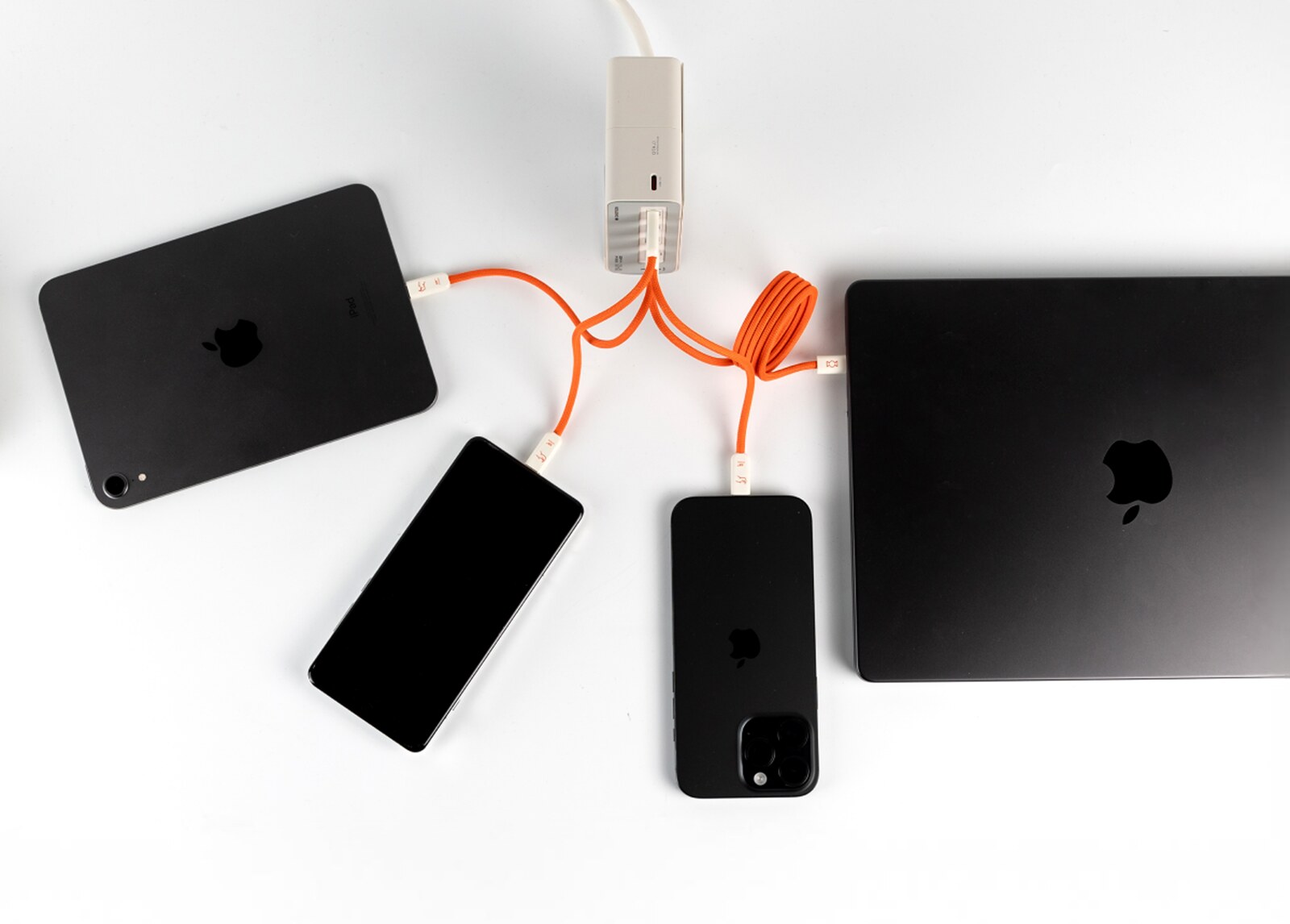
AI CoCan Mirror charging multiple devices at once
Multi-Device Charging One Mirror looks after a laptop, tablet, and phone at once.

FluxAI® is easiest to understand when several devices are connected at once: demand changes, and the pool keeps reallocating underneath.

160F>250

Two measured hours, 18Wh more delivered, four power banks full 20 minutes sooner.

Run a traditional charging station rated at 250W side by side: over two hours the 160W FluxAI® system delivers 296.4Wh, roughly 18Wh more. It fills four power banks - ANKER A1695, Cuktech PB100P, Cuktech PB20OU, and ANKER A1340 - about 20 minutes faster. A smaller rating, more energy in hand - that is 160F > 250.

No Dropouts

Plug in one more device, and the one already charging never blinks.

The classic embarrassment of a multi-port charger is the instant you add a second device: the first gets force-throttled or briefly cut, the screen blinks, a file transfer breaks, an external drive throws an eject warning. This usually comes from hard switching; when the charger changes rows and renegotiates PD, a port can lose supply for a moment.

FluxAI® reads no table. It rewrites each port's PDO on the fly, without dropping the connection, and reallocates the full 160W across whatever is present. Through the handover, devices already charging keep both link and power: someone plugs in a phone beside you and the screen does not blink, the bus-powered drive does not drop, the call does not stutter.

Behind that steadiness sits a full stream of live state: each port's current protocol tier, the device's request curve, the cable's current ceiling, the unit's thermal headroom. FluxAI® reads all of it continuously, which is how it reshuffles power both fast and without interrupting a single device.

140W Ceiling On Any Port

Any port can reach the top tier, scheduled from the 160W total budget.

01

Equal 140W ceilings

All four USB-C ports support up to 140W. Plug a laptop into any one and, when the 160W system budget allows, it can take the top tier — no fastest socket to memorize.

02

Two laptops share power. No dropouts.

Two laptops draw 80W each at once, with a phone, tablet, and earbud case alongside — nothing waits in line for a port.

03

Flows on demand

Power follows each device's current demand, free of port labels and fixed tiers, so switching ports never means replugging.

High-Energy Cruise

Sustained output that holds — never a peak that flashes by.

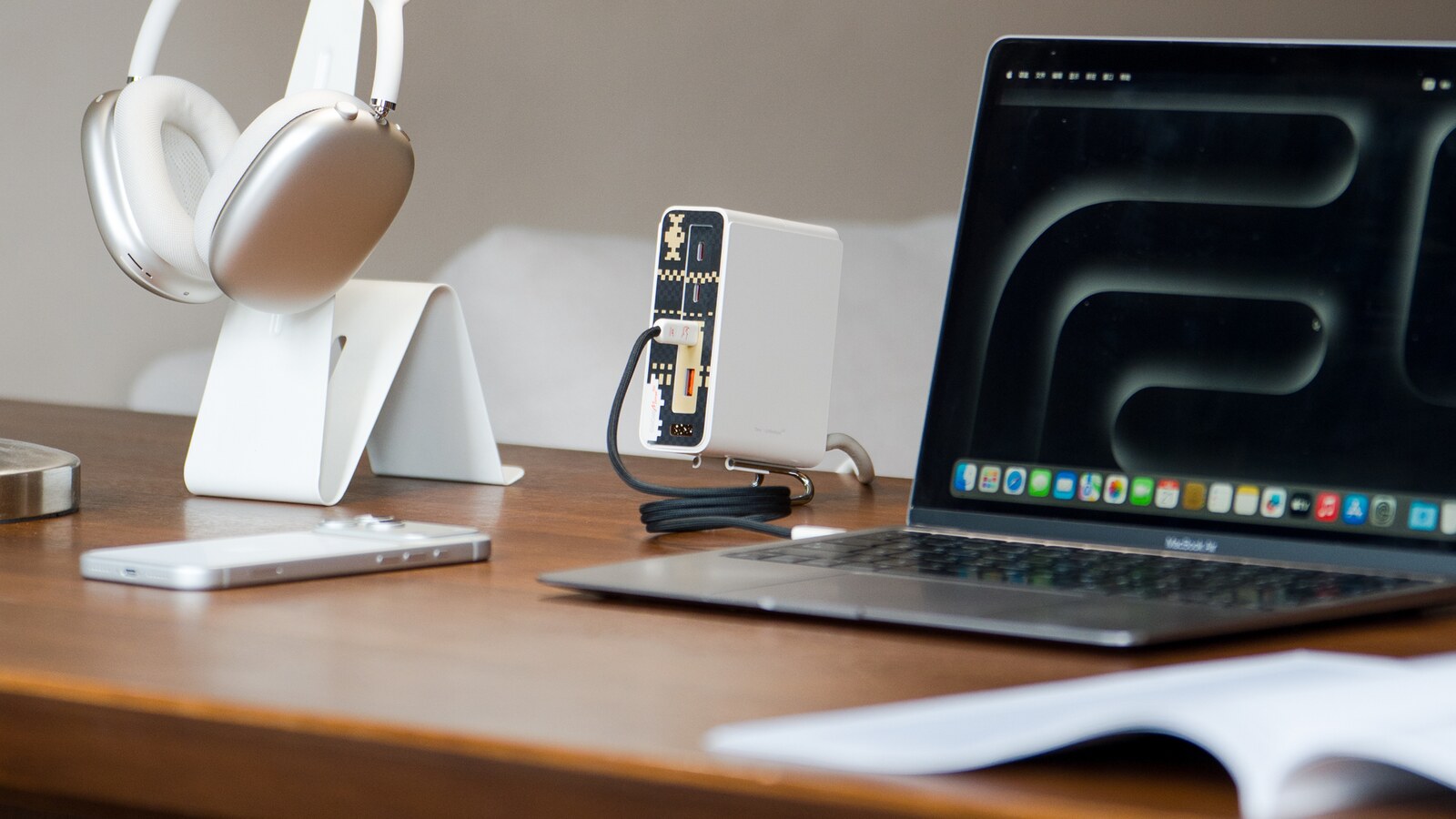
AI CoCan Mirror powering a desk laptop for a long session

Plenty of chargers deliver high power as a timed peak: a hard burst up front, then a fade once temperature climbs. Fine for topping up a phone, thin for an all-night hackathon, a long render, or local AI inference. Those scenes want power that holds for hours without sagging.

Mirror calls this high-energy cruise: in normal conditions a single unit holds 140W; add the Oxie stand for stronger airflow and sustained power unlocks to 160W. Give it smoother cooling and it runs flat-out for the long haul.

Why it stays steady comes back to efficiency and headroom. A 93.7% conversion rate means less heat to shed, and ripple near 18mV sits far under the national-standard ceiling of 200mVp-p, keeping supply clean and flat. Physical limits reach 105℃, 32A, and 1000V, leaving 64.2% voltage headroom and a one-eighth current load ratio, so everyday operation runs well clear of the edge.

So long jobs don't rattle it: a render overnight, an inference script all afternoon, a hackathon to sunrise — the power curve stays the flat line it should be. Sustained cruise buys you endurance you can lean on.

The fifteen minutes before you leave

Given the same window, it sends power to whatever needs to be full first.

You have fifteen minutes before a trip, and your phone, earbuds, and laptop are all empty. A timer-peak charger lets all three crawl up together and none of them finishes. FluxAI® works differently: it reads which device most needs to be full in those fifteen minutes, leans power that way, then hands the surplus to the next one.

Night is another story. Plugged in before sleep with nothing in a hurry, the system slows the pace, dims the screen, and keeps temperature low all night. The same machine sprints by day and simmers by night, through port priority and modes — no getting up at 3 a.m. to swap a cable.

Plug, unplug, drop demand, hit a thermal limit, change a request: allocation keeps up. No management required.

Tester sign-up

Leave a message